
778 Lifesaving Missions in 2025: A Record Year for BMA CQ Rescue
BMA CQ Rescue is reflecting on a record year of operations in 2025, with the community-funded rescue helicopter completing 778 lifesaving missions across Central and North Queensland.
The figure represents a significant increase from the 2024 figures, when crews flew 729 missions and spent more than 1,076 hours in the air, highlighting the growing demand for the critical service.
BMA CQ Rescue’s General Manager Lisa Martin said the numbers tell a powerful story about the region’s reliance on the service.
“Behind every one of these missions is a real person, a real family, and a moment where time truly mattered,” Ms Martin said. “Responding to 778 missions in one year is something we’re incredibly proud of, but it also shows just how much our community relies on this service.”
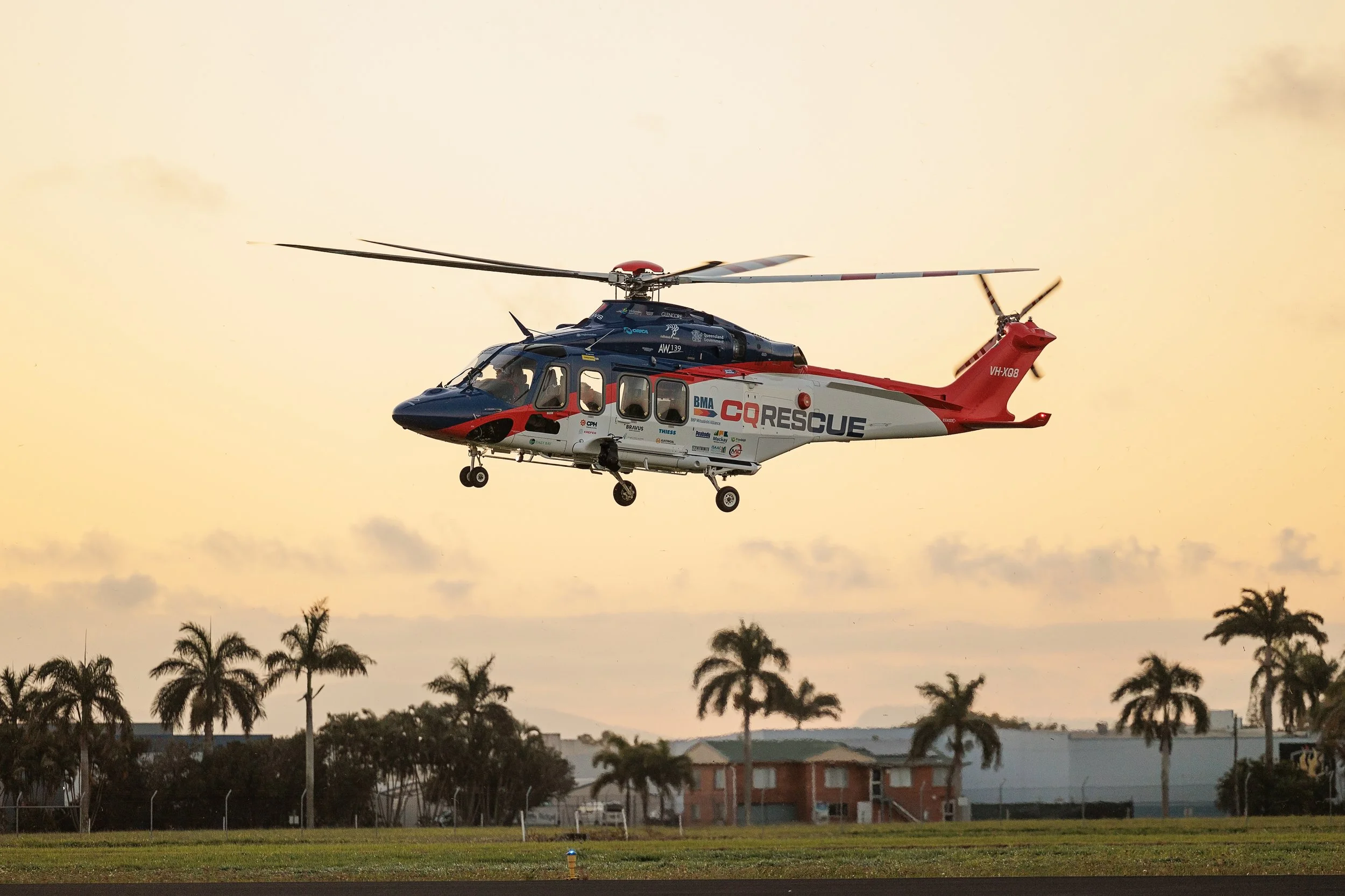
Over the past 12 months, BMA CQ Rescue covered an extraordinary 339,177 kilometres, helping people in some of the region’s most remote and challenging locations.
The majority of the workload remained inter-facility transfers, with 455 patients requiring urgent access to specialist care not available locally.
Crews also responded to 135 primary emergencies and completed 29 search and rescue operations.
Flights were conducted repeatedly to communities including Bowen, Proserpine, Moranbah, Dysart, Townsville, Clermont, and Collinsville, while also continuing to support island and remote communities across our region.
Cardiac emergencies once again made up the largest portion of the service’s workload in 2025, followed by abdominal and cranial emergencies.
Ms Martin said demand for the service continues to grow year on year.
“Compared to 2024, we’re seeing more missions, more patients, and more kilometres flown. The calls for help come more often, and the helicopter is flying further and more frequently than ever before,” she said.
BMA CQ Rescue is a community-funded rescue helicopter service, with every mission made possible through the support of donors, sponsors, and partners.
“Quite simply, we could not do this without our community,” Ms Martin said. “Their support keeps our aircraft mission-ready, our crews trained and available, and ensures this lifesaving service remains prepared 24/7, 365 days a year.
As 2026 begins, the organisation expects demand to continue increasing, along with the responsibility and cost of keeping this vital service in the sky.
“We’re incredibly proud of what was achieved in 2025, but we also know the need isn’t slowing down,” Ms Martin said. “Our commitment is to always be there when our community needs us most.”